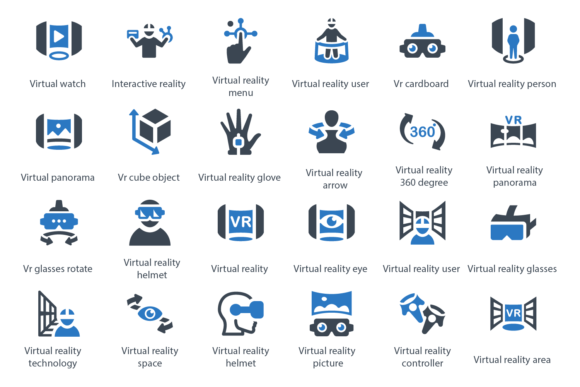
Virtual Reality Icons: Enhancing Design with Precision and Clarity
Virtual reality icons are more than just visual elements—they’re essential tools that bridge the gap between complex technology and intuitive user experience. Whether you're designing a website, crafting a presentation, or developing marketing materials, these icons bring clarity, consistency, and a modern aesthetic to your projects. Meticulously designed and highly adaptable, virtual reality icons serve as a universal visual language for digital and print media.
Understanding Virtual Reality Icons
Virtual reality icons are symbolic representations of actions, concepts, or objects related to virtual reality (VR) environments. These icons are designed with precision to ensure they are instantly recognizable and scalable across various platforms. Each icon is crafted to convey meaning at a glance, making them ideal for both technical and consumer-facing applications.
From headsets and hand controllers to immersive environments and interactive menus, virtual reality icons simplify communication in design projects. They help users navigate digital spaces more effectively and provide visual cues that enhance engagement and understanding.
Key Features of High-Quality Virtual Reality Icons
- Fully editable AI and EPS files: These vector formats allow for seamless customization, ensuring icons can be resized and recolored without losing quality.
- Transparent PNG at 256×256 pixels: Perfect for web and app interfaces, these icons maintain clarity on any background and are easy to integrate into digital layouts.
- SVG format for each icon: Scalable Vector Graphics ensure icons remain sharp on all screen sizes and resolutions, making them ideal for responsive design.
Where Can Virtual Reality Icons Be Used?
These icons are versatile and can be applied across a wide range of design projects. Here are some of the most common and effective use cases:
- Website Design: Use icons to represent VR features, navigation elements, or service offerings. They help reduce text clutter and improve visual hierarchy.
- Promotional Materials: Whether it's a poster, flyer, or social media graphic, virtual reality icons add a modern and tech-savvy touch to marketing content.
- Presentations: Icons enhance slides by visually reinforcing key points and making complex information easier to digest.
- Infographics: When illustrating data or processes related to VR, icons provide a clean and consistent visual style.
- Printed Media: From brochures to packaging, these icons maintain their quality when scaled, making them suitable for both digital and print production.
Who Benefits from Using Virtual Reality Icons?
These icons are valuable to a broad audience, including:
- Web and UI/UX designers: Looking to create immersive, user-friendly interfaces.
- Developers: Integrating visual cues into apps or platforms that utilize VR technology.
- Business owners: Marketing VR-related products or services with professional and recognizable visuals.
- Educators and trainers: Using visual aids to explain virtual environments or simulations.
- Content creators: Designing engaging social media posts, blog graphics, or video thumbnails that reflect VR themes.
The Value of Meticulously Designed Icons
While many icon sets are available online, not all are created equal. Meticulously designed virtual reality icons offer several advantages:
- Consistency: Uniform line weight, color palette, and style ensure a cohesive look across all visuals.
- Scalability: Vector formats allow icons to be used on everything from mobile screens to large billboards without loss of quality.
- Customization: With AI and EPS files, designers can easily adjust icons to match brand colors, styles, or layout requirements.
- Professionalism: High-quality icons elevate the overall design, lending a polished and credible appearance to any project.
Real-World Applications of Virtual Reality Icons
Let’s explore a few real-world examples of how virtual reality icons can be applied effectively:
- VR Game Interface: Icons help players quickly identify controls, settings, and game features without lengthy text explanations.
- E-commerce Site for VR Hardware: Product pages use icons to highlight features like wireless connectivity, motion tracking, and compatibility.
- Educational App: An app teaching students about virtual simulations uses icons to guide them through lessons and activities.
- Event Promotion: A tech conference promoting VR innovations uses icons in posters and banners to visually represent immersive experiences.
Considerations When Choosing Virtual Reality Icons
Not every icon set will be the right fit for your project. Here are some important factors to consider:
- Relevance: Ensure the icon set includes visuals that match your content or application. A general tech icon set may not have the specific symbols you need for VR.
- File Formats: Check that the set includes AI, EPS, SVG, and PNG files for maximum flexibility.
- Licensing: Confirm whether the icons can be used commercially and if attribution is required.
- Style Compatibility: The design style should align with your brand or project aesthetic—whether minimalist, flat, or skeuomorphic.
Setting Realistic Expectations
While virtual reality icons are powerful tools, they are not a one-size-fits-all solution. Designers should understand that:
- Icons need context: Even the clearest icon may require a label or brief explanation in certain applications.
- Overuse can clutter: Too many icons can overwhelm the user and reduce their effectiveness.
- Not all users interpret icons the same way: Testing with real users can help ensure your icons are intuitive and effective.
How to Evaluate Icon Sets for Your Needs
When evaluating virtual reality icon sets, ask yourself the following questions:
- Does the set include icons relevant to my project or industry?
- Are multiple file formats provided for flexibility in design and development?
- Is the design style modern, clean, and adaptable to different backgrounds and layouts?
- Are the icons scalable without distortion or pixelation?
- Is the licensing model clear and appropriate for my intended use?
By answering these questions, you can ensure that the icons you choose will enhance your project rather than complicate it.
Final Thoughts
Virtual reality icons are more than decorative elements—they are essential tools that improve communication, enhance user experience, and streamline design workflows. Whether you're a web designer, developer, marketer, or educator, integrating these icons into your projects can elevate your visuals and make your content more accessible and engaging.
With fully editable AI and EPS files, transparent PNGs, and SVG options, virtual reality icons offer unmatched flexibility and quality. As virtual reality continues to shape the future of digital interaction, having a reliable and professionally designed icon set will help you stay ahead of the curve and deliver compelling, visually rich experiences.