Books Runs Card Game: Strategic Play for Real-World Thinking
The Books Runs Card Game is more than just a social card game—it's a dynamic tool for sharpening decision-making, fostering creativity, and encouraging strategic thinking. Designed for groups of three or more players, this game simulates the unpredictable nature of real-world planning and execution. Whether you're a small business owner, a content creator, or a professional looking to refine your strategic instincts, the Books Runs Card Game offers a structured yet flexible environment to practice thinking under pressure.
Understanding the Core Mechanics
At its heart, the Books Runs Card Game revolves around collecting and managing "book runs"—a sequence of cards that represent different genres, themes, or narrative arcs. Players must balance risk and reward by deciding when to hold, trade, or discard cards to build the most valuable set. The game encourages forward-thinking and adaptability, making it a compelling choice for professionals who regularly navigate shifting priorities and limited resources.
Each round introduces new constraints and opportunities, mirroring real-world conditions such as market changes, resource scarcity, or team dynamics. This structure makes the Books Runs Card Game not just entertaining, but also a practical framework for exploring how to respond to uncertainty with clarity and purpose.
Why Strategic Play Matters
Playing the Books Runs Card Game with intention transforms it from a casual pastime into a strategic exercise. The game rewards players who can anticipate outcomes, manage limited resources, and adjust their approach mid-game. These are the same skills that professionals rely on when planning campaigns, managing teams, or launching new products.
- Decision-making under uncertainty—The game's shifting conditions mirror real-world unpredictability, helping players build comfort with ambiguity.
- Resource allocation—Players must choose how to use their cards wisely, just as businesses must allocate time, budget, and personnel effectively.
- Strategic positioning—Understanding when to play defensively or aggressively influences long-term success in both the game and business environments.
Using the Game for Professional Development
Many professionals use the Books Runs Card Game as a collaborative tool for team-building and strategic workshops. Its flexible format allows facilitators to tailor gameplay to specific learning objectives, such as:
- Practicing scenario planning under pressure
- Developing negotiation and communication skills
- Encouraging creative problem-solving through unexpected card combinations
For example, marketing teams can simulate campaign planning by assigning each card a specific marketing channel or tactic. Educators might use the game to illustrate narrative structure or genre development in literature courses. The key is to align gameplay mechanics with real-world goals to maximize strategic learning.
When to Use the Books Runs Card Game
While the Books Runs Card Game is versatile, it works best when used intentionally. It's particularly valuable in the following contexts:
- Team-building sessions—Encourages collaboration and strategic thinking in a low-stakes environment.
- Workshops and training—Provides a hands-on way to explore decision-making frameworks and resource management.
- Personal development—Helps individuals refine their strategic instincts and adaptability in a fun, engaging format.
However, the game is less effective when used without clear goals or structure. Without a defined purpose, gameplay can devolve into random moves and missed learning opportunities. To avoid this, always establish a context or objective before starting.
Getting Started: Key Considerations
Before diving into the Books Runs Card Game, consider the following to ensure a meaningful experience:
- Define the goal—Is the focus on team-building, skill development, or strategic exploration? Align gameplay with a clear objective.
- Set the context—Introduce a narrative or real-world scenario to make the game feel relevant and engaging.
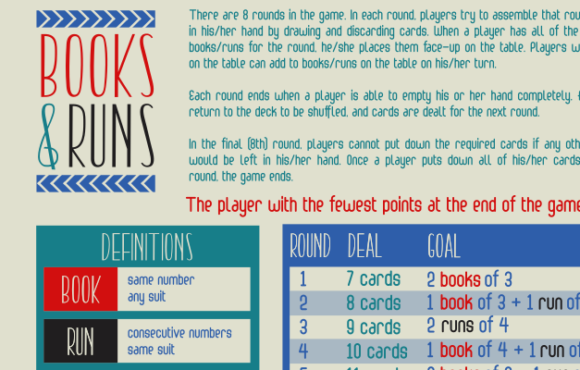
- Establish rules and variations—Use the included infographic to clarify standard gameplay and any custom rules you want to apply.
The included colorful infographic provides a clear visual guide to the game's rules, variations, and best practices. Designed for standard 8.5 x 11-inch paper, it's ideal for printing and display in workspaces, classrooms, or meeting rooms. A true white printer-friendly version and a black-and-white copier-friendly version ensure accessibility for all settings, and all versions are available in SVG and PNG formats for easy sharing and customization.
Planning Tips for Effective Gameplay
Maximize the value of the Books Runs Card Game by approaching it with a planner's mindset:
- Map out potential outcomes—Consider how each move might affect future options, just as you would in business strategy.
- Observe patterns—Pay attention to how other players react to different scenarios. This can reveal strategic tendencies and blind spots.
- Reflect after each round—Use debrief sessions to discuss what worked, what didn’t, and why. This reflection is where real learning happens.
By treating each game as a microcosm of real-world decision-making, players can extract valuable insights applicable far beyond the table.
Strategic Observations from the Game
One of the most compelling aspects of the Books Runs Card Game is how it surfaces strategic behaviors that often go unnoticed in daily work. For instance:
- Players who hoard cards often miss opportunities to trade for better combinations—similar to businesses that hold onto outdated strategies instead of pivoting.
- Those who act too early may reveal their intentions, giving others the chance to block or counter—just like in competitive markets.
- Successful players tend to balance short-term gains with long-term positioning, a skill that translates directly to project planning and resource allocation.
These observations highlight how the Books Runs Card Game can serve as a mirror for real-world behavior, offering players a safe space to experiment and learn.
Risks of Misusing the Game
Like any strategic tool, the Books Runs Card Game loses its value when used without intention. Playing randomly, without defined goals or reflection, can lead to:
- Missed learning opportunities—Without debriefing or context, players may not connect gameplay to real-world applications.
- Reinforced bad habits—If players aren't guided to reflect on their decisions, poor strategies may be reinforced rather than corrected.
- Low engagement—A lack of structure or purpose can make the game feel arbitrary, reducing motivation and participation.
To avoid these pitfalls, always pair gameplay with discussion, reflection, and real-world application.
Making the Most of the Infographic
The colorful infographic included with the Books Runs Card Game is more than just a visual aid—it's a strategic companion. Designed to be printed at 8.5 x 11 inches, it's perfect for reference during gameplay or as a training handout. The printer-friendly white version ensures clarity when printed on color-limited devices, and the black-and-white copier version allows for easy reproduction in classrooms or offices.
All versions are available in SVG and PNG formats, making it simple to integrate into digital presentations, training materials, or internal wikis. Whether you're a facilitator, educator, or team leader, the infographic is a valuable asset for reinforcing game rules and strategic thinking.
Long-Term Value of Strategic Play
When played with intention, the Books Runs Card Game becomes more than a game—it becomes a recurring exercise in strategic clarity. Over time, players develop sharper instincts for decision-making, pattern recognition, and adaptive planning. These skills are essential for professionals navigating complex, fast-moving environments.
By integrating the Books Runs Card Game into regular team activities or personal development routines, players can cultivate a mindset that values thoughtful action over reactive behavior. The game becomes a shared language for discussing strategy, risk, and opportunity in a way that's both engaging and actionable.